One of the most common questions homeowners ask when choosing handcrafted decor is: “Will this clash with my cabinets?” It’s a valid concern. You’ve found a stunning, hand-carved Natural Wood Fruit Bowl, but you’re worried that adding a different wood tone to your kitchen will make the space look cluttered rather than curated.
Here is the secret that interior designers know: Modern kitchens aren’t about “matching”, they are about “mixing.” When you mix wood grains intentionally, you add layers, warmth, and a sense of history to your home. Here is your guide to mastering the art of the mix.
Identify Your “Dominant Wood”
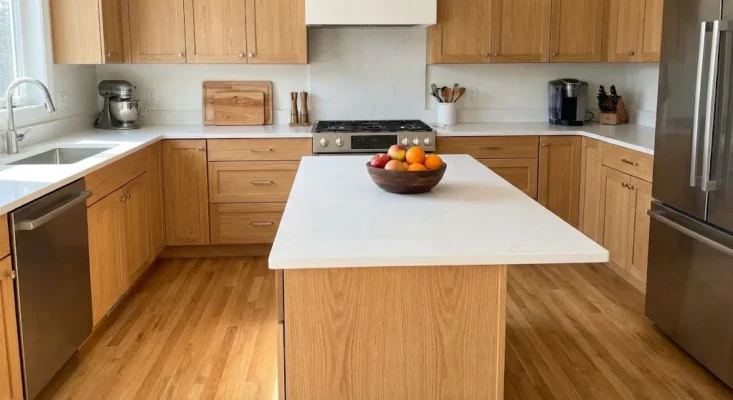
Every kitchen has a dominant wood tone, usually your cabinetry or your hardwood floors. This is your “anchor.” To keep the room from feeling chaotic, follow the Rule of Three: try to limit the wood tones in one space to three distinct varieties.
Your fruit bowl acts as an accent wood. Because it is a smaller piece, it is the perfect “low-risk” way to introduce a new texture or a pop of contrast to your dominant wood.
Think in “Temperatures,” Not Colors
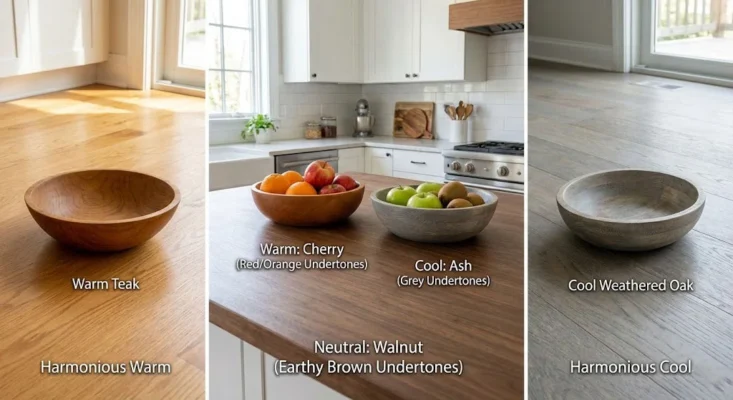
Rather than trying to match the exact shade of your cabinets, look at the undertone of the wood. Wood usually falls into three temperature categories:
-
Warm: Yellow, orange, or red undertones (e.g., Cherry, Honey Oak, Mahogany).
-
Cool: Grey or “ashy” undertones (e.g., Weathered Oak, Grey-washed Ash).
-
Neutral: Earthy brown undertones (e.g., Walnut, Maple).
The Designer Tip: Stay within the same temperature family. If your floors have a warm honey glow, a warm-toned Teak or Cherry bowl will look harmonious, even if the colors aren’t identical.
Play with Grain Scale
The “grain” is the natural pattern of the wood fibers.
-
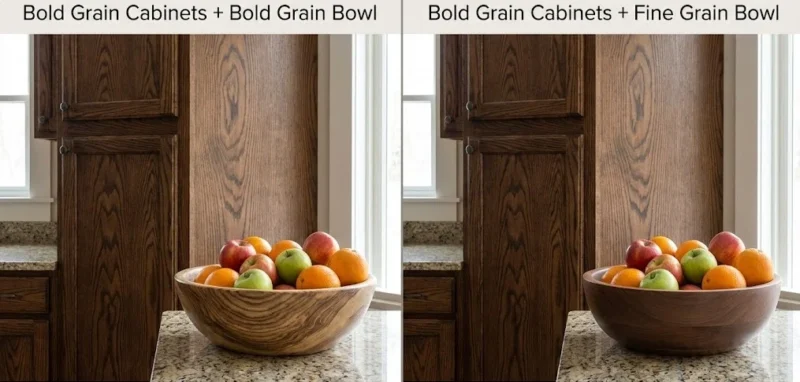
Bold Grains: Woods like Oak or Ash have large, swirling patterns (often called “cathedrals”).
-
Fine Grains: Woods like Walnut or Maple have very tight, subtle lines.
If your kitchen cabinets have a very busy, bold grain, choose a fruit bowl with a fine, smooth grain. This creates a visual “rest” for the eye and allows the bowl’s shape to be the star of the show.
Quick Pairing Guide
| If your Kitchen has… | Try a Fruit Bowl in… | Why it Works |
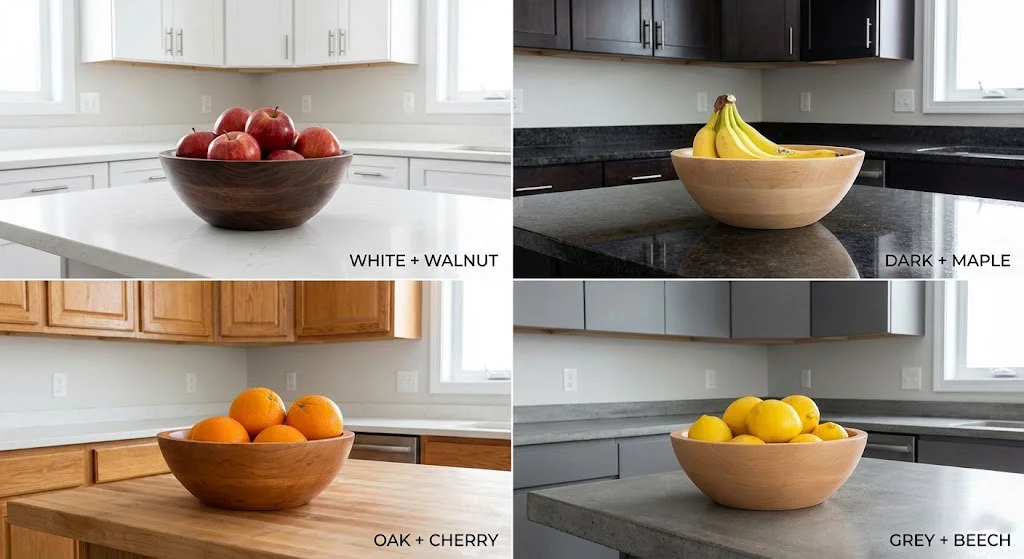
| White or Cream Cabinets | Dark Walnut | Creates a high-contrast, modern “pop” that feels luxurious. |
| Honey Oak / Warm Wood | Medium Teak or Acacia | Maintains the “warmth” of the room without looking like a “set.” |
| Dark Espresso Cabinets | Light Maple or Beech | Brightens up a dark countertop and highlights the organic shape. |
| Grey or Modern Slate | Natural White Oak | Adds organic texture to a “cool” space without clashing. |
The “Buffer” Trick
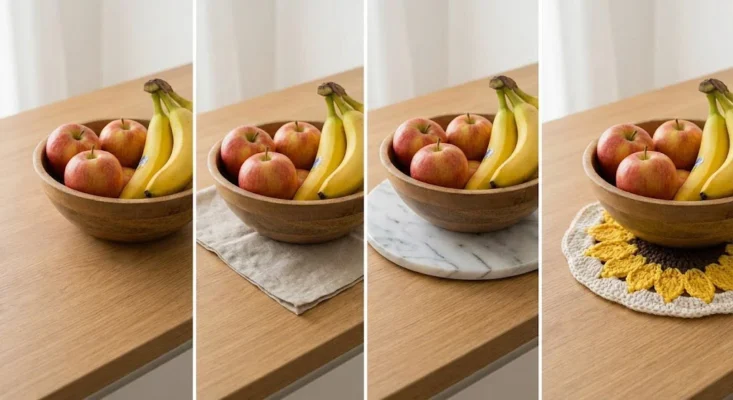
What happens if your bowl is almost the same color as your countertop? This is where clashing usually happens. To fix this, use a buffer texture.
Place a linen napkin, a marble trivet, or even a crochet coaster (like your sunflower accents!) underneath the bowl. This “breaks” the line of sight between the two woods, making the subtle difference in grain look like a deliberate design choice rather than an accidental mismatch.
Embrace the “Organic Modern” Vibe
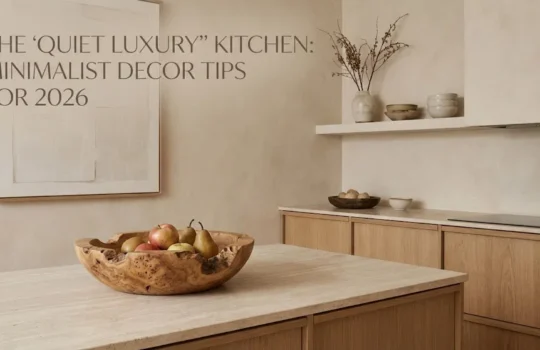
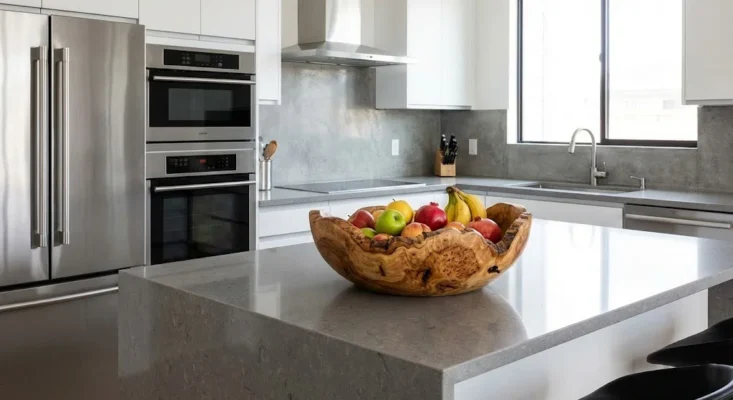
The goal of using natural wood is to bring the outside in. In a high-tech kitchen full of stainless steel appliances and stone counters, a natural wood fruit bowl provides a necessary “organic” touch. The irregular, unique patterns of a hand-carved bowl soften the hard edges of the kitchen, making it feel like a home rather than a showroom.
Trust Your Eye
At the end of the day, wood is a product of nature, and in nature, different trees grow side-by-side beautifully. If a piece of wood speaks to you, it will likely find its place in your home. A natural fruit bowl isn’t just a container, it’s a piece of art that evolves with your kitchen’s story.